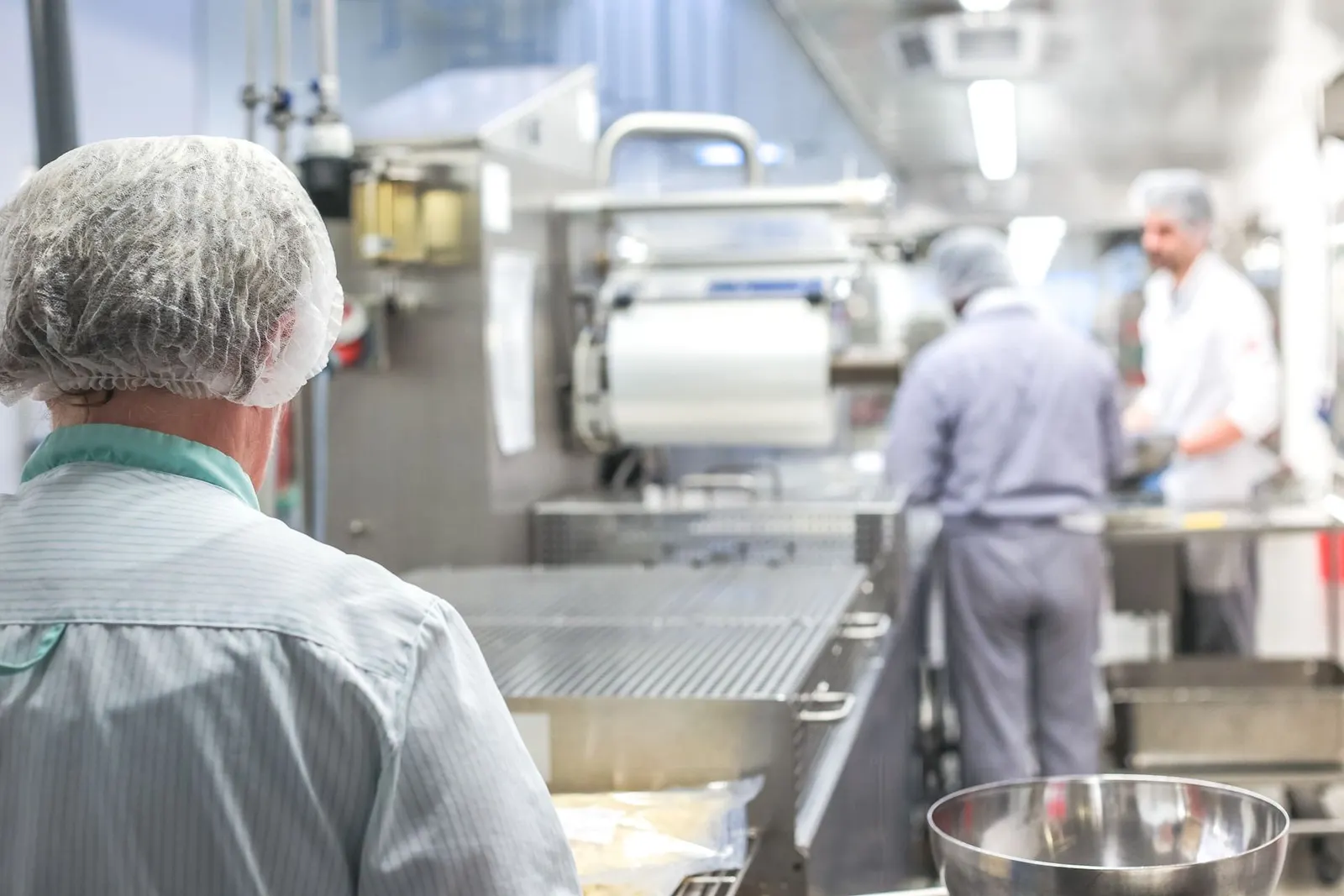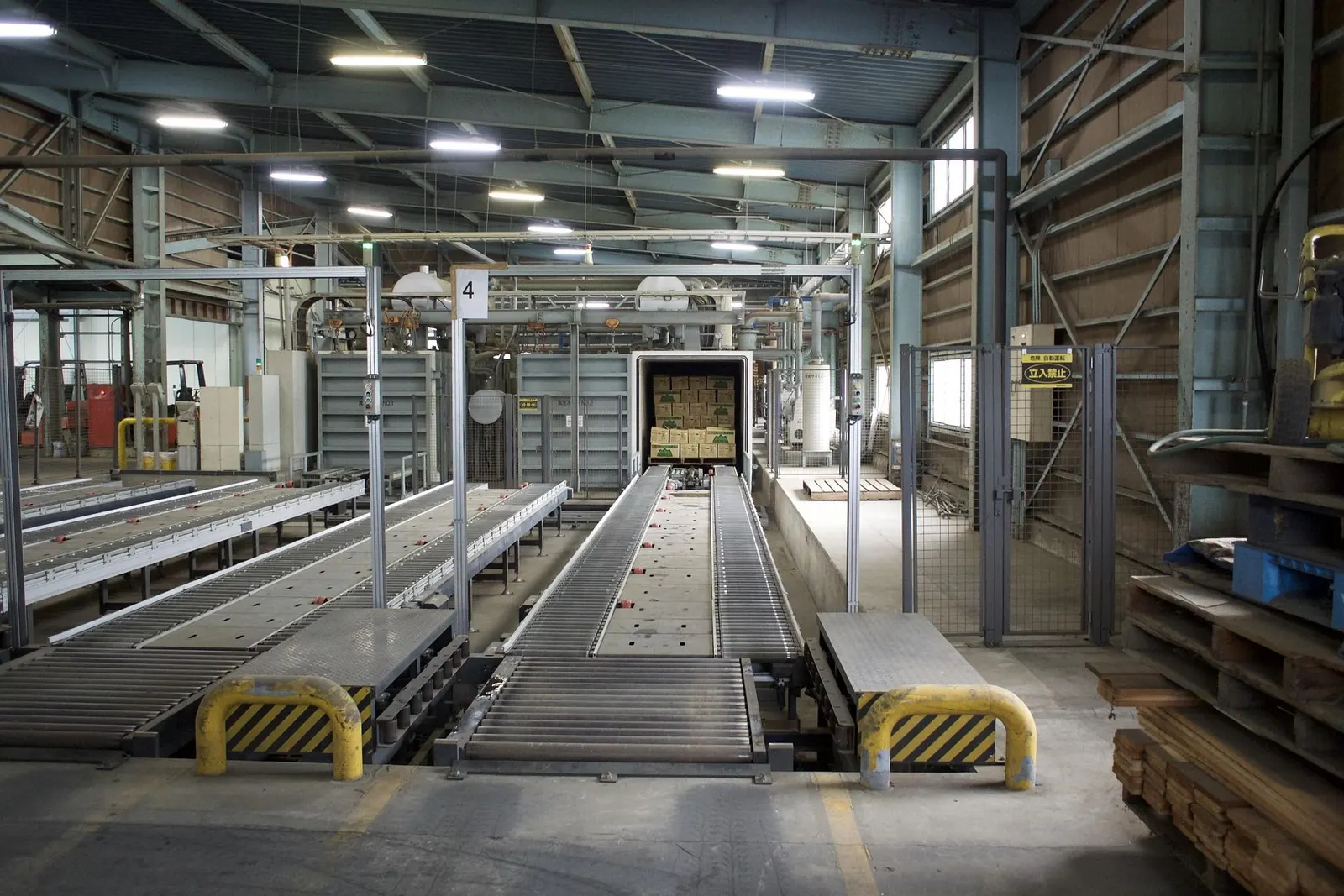
End-of-line automation for food and dairy
End-of-line, engineered to your line rate.
Four standardised robotic palletising and case-packing cells for food and dairy producers. Pick the one that fits your cases per minute, floor and hygiene zone – then let us check it against your real line.
- Line rate
- 8–48 cases/min
- Case weight
- ≤ 40 kg
- Infeed lines per cell
- 1–3
- Standard cells
- 4 models
Why lines call us
Five reasons the end of the line becomes the bottleneck
Most projects start with one of these. Name yours in the assessment and we start from there.
Nobody wants the stacking shift
Manual palletising is repetitive, heavy and hard to staff on nights and weekends.
The filler got faster
A new filler or wrapper lifts line speed; the people at the end of the line cannot follow.
More SKUs, more patterns
New formats and retailer-specific pallets mean more changeovers per shift.
Ergonomics and safety
Lifting 12–25 kg cases hundreds of times per shift is a known strain risk.
OEE losses at the end
Upstream waits when the end of line stops. A buffer and a reliable cell protect the whole line.
Not sure which applies?
Enter seven numbers in the selector and see which cell fits.
Open the selector →The range
Four cells. Published specs.
Every spec is on the page and in a downloadable datasheet. No form in front of a number.
Collaborative column palletiser
KP-20 Compact
One line, light cases, tight floor. No fence.
- Payload
- 20 kg
- Cases/min
- 8
- Lines
- 1
- Footprint
- 10.2 m²
- Changeover
- ≈ 4 min
Industrial dual-infeed palletiser
KP-40 Duo
Two lines into one cell, dual pick, two pallet stations.
- Payload
- 40 kg
- Cases/min
- 24
- Lines
- 2
- Footprint
- 23.9 m²
- Changeover
- ≈ 8 min
Stainless washdown palletiser
KP-HX Hygienic
Stainless frame and gripper for wet and washdown areas.
- Payload
- 60 kg
- Cases/min
- 20
- Lines
- 1
- Footprint
- 20.2 m²
- Changeover
- ≈ 10 min
High-rate multi-line palletiser
KP-120 Line
Up to three lines, layer forming, automatic tool change.
- Payload
- 180 kg
- Cases/min
- 48
- Lines
- 3
- Footprint
- 42.0 m²
- Changeover
- ≈ 5 min
How a project runs
Assess. Simulate. Build. Run.
- 01
Line assessment
Line rate, case data, patterns, floor and hygiene, measured on site.
- 02
Layout and cycle simulation
Cell layout on your floor plan and a cycle-time check against peak rate.
- 03
FAT, install, SAT
Tested with your cases before shipping; installed in a planned stop.
Two yoghurt lines into one KP-40 Duo
How a fictional fresh-dairy site could move two manually palletised lines into one cell – with the assumptions written down.